

Shop Soulfully
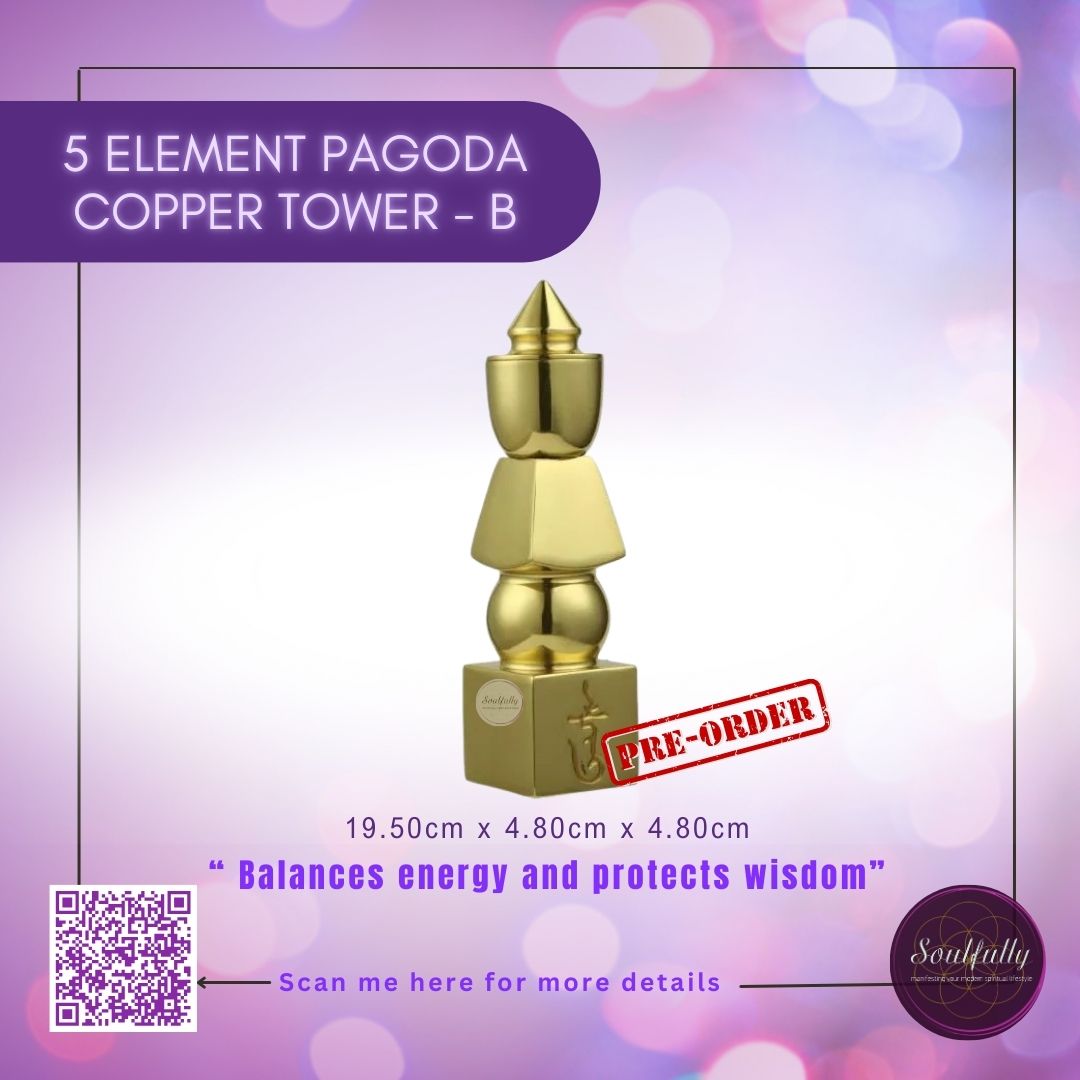
Copper Feng Shui 5 Element PAGODA Tower (PRE-ORDER)
Copper Feng Shui 5 Element PAGODA Tower (PRE-ORDER)
Couldn't load pickup availability
A Five-Element Pagoda Tower is a traditional Buddhist monument, most commonly from Japan, and it’s called a Gorintō (五輪塔).
What it is
A Five-Element Pagoda is a stone tower made of five stacked shapes, and each shape represents a fundamental element of the universe according to Buddhist philosophy.
The five elements (from bottom to top)
Each level has a specific shape + meaning:
-
Earth (Chi) – Cube
→ stability, solidity, the physical body -
Water (Sui) – Sphere
→ fluidity, adaptability, emotions -
Fire (Ka) – Pyramid / triangle
→ energy, transformation, passion -
Wind (Fū) – Crescent / half-moon
→ movement, breath, growth -
Void / Space (Kū) – Jewel or lotus shape
→ spirit, enlightenment, the universe itself
What it’s used for
- 🪦 Grave markers for monks or important people
- 🧘 Meditation symbols (body → spirit progression)
- 🛕 Temple monuments
- 📿 Spiritual teaching tools about impermanence and enlightenment
Big idea behind it
It shows the journey from physical existence (earth) up to pure consciousness (void) — basically:
From body → mind → spirit → enlightenment
If you’ve seen one and thought “that looks oddly geometric and symbolic,” you were 100% right 😄
Nice choice 😌 let’s talk feng shui + energy.
Five-Element Pagoda Tower in Feng Shui
In feng shui, the Five-Element Pagoda is seen as a powerful energy balancer and protector, because it stacks all elements in perfect harmony from dense → subtle.
The energy flow (bottom → top)
Think of it like energy rising and refining:
Earth → Water → Fire → Wind → Void
This creates:
- grounded energy at the base
- smooth emotional flow in the middle
- activation and clarity above
- and spiritual calm at the top
Basically: no chaos, no stagnation.
What it’s believed to do
🛡️ Protection
Traditionally used to:
- neutralize heavy or stagnant energy
- calm areas associated with loss, illness, or instability
- protect against Sha Qi (harsh, attacking energy)
That’s why pagoda towers are often placed near:
- cemeteries
- temples
- quiet garden corners
- study or meditation areas
🧠 Mental clarity & wisdom
Because the top element is Void (Kū):
- it’s linked to insight, learning, and higher thinking
- often recommended for study desks, libraries, or offices
- symbolically helps “rise above” stress and noise
(Some feng shui schools even connect it with academic success.)
Where to place it (general guidelines)
✔ Good locations
- Study room / office
- Meditation space
- Quiet corner of the home
- Garden or altar area
⚠️ Avoid
- Bedroom (too activating mentally)
- Kitchen (fire clashes with structure)
- Bathroom (energy drains downward)
Material matters
- Stone → grounding, long-term stability
- Metal → sharper focus, protection
- Wood → growth, learning, creativity
Size matters too:
Small = personal focus
Large = space protection
The key feng shui idea
Unlike single-element cures, this tower works because nothing is missing.
It’s about integration, not dominance.
If you want, next I can:
- tell you which direction it works best in (Bagua map)
- help you choose one based on your goal (study, peace, protection)
- or explain how it differs from 5-element cures in Chinese feng shui
- Just point 👉